The Paradox of Perfection: Why We Compare Ourselves
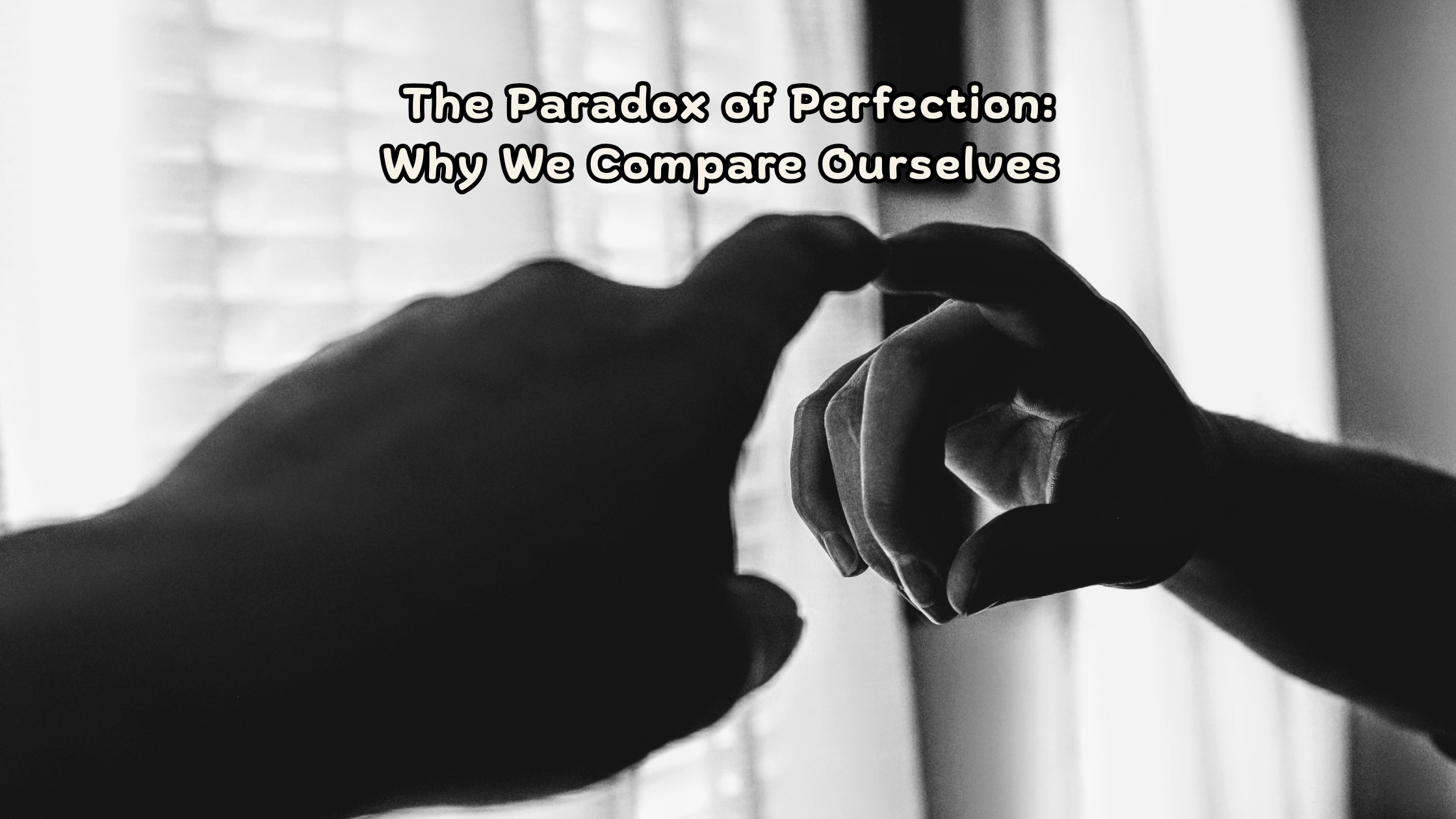
(and How to Stop Believing Every Story We Tell Ourselves)
The Only Thing Flawed About Imperfection Might Be How We See It
I’ve recently come to understand intimately how damaging comparison can be… and yet…
A few weeks ago, I caught myself standing in front of the mirror wondering when exactly that younger version of me who I still “see” in my inner mirror, had moved out of the real mirror.
Not because I genuinely want to be twenty-one again (trust me... not the best years of my life… no thanks).
But for just a moment, I found myself comparing the woman looking back at me to someone who no longer exists – and certainly not just physically… on so many levels.
And as I filtered through the thoughts going through my head, it occurred to me that comparison doesn't disappear as we get older – it just changes its lens.
When we're young, we compare ourselves to classmates, friends, celebrities, and people we hope we'll someday become.
As we get older, we begin comparing ourselves to younger versions of ourselves.
Or I wonder if, inevitably, to people whose lives seem more successful, more polished, or somehow more "together" than our own.
The habit sticks around… even though the targets sometimes change.
The Strange Part
So here's what fascinated me as I thought about this paradox…
Most of us know the lives we see online aren't complete. We know social media is curated, and we know the smiling family photo probably didn't include the argument that happened five minutes earlier.
We know influencers don't usually post their rejection letters, panic attacks, or the tears they cried in the shower the night before.
We know all of this.
And yet...
We still compare ourselves anyway.
Why?
I don't think it's because we're gullible. No… I think it's just part of being human.
Ancient Software, Modern Problems
One of the things I love about anthropology and neuroscience is that they can help us find rational explanations for some of the seemingly irrational things otherwise intelligent people do.
You see… For most of human history, belonging wasn't just emotionally important. It was survival.
Our brains developed to be remarkably skillful at watching the people around us and asking questions like:
Do I fit in?
Am I accepted?
Am I safe?
That ancient wiring didn't disappear when we started printing magazines, creating commercials - or when we invented smartphones. All we did was provide it with a much wider audience.
Instead of comparing ourselves to a few dozen people in our community... now we’re comparing ourselves to hundreds - or even thousands - of carefully curated lives every week. Lives of people we don’t really know – and where we don’t get the behind-the-scenes footage of the messy parts.
Maybe Comparison Isn't the Problem
But the biggest insight I had during this mini existential crisis wasn’t about social media… marketing… advertising… or the algorithms that feed our worst insecurities… It was realizing that comparison itself isn't necessarily the villain.
The truth is that healthy comparison can inspire us to learn. It can encourage us to grow. It can motivate us to become more curious.
Those are good things.
I think the problem is more about comparison quietly shifting us away from asking: "What can I learn?"…
And makes us start asking: "What's wrong with me?"
Completely different conversations.
The reality is that many of the things we call "flaws" aren't objective. They aren’t impartial. And they have an agenda.
What they end up being, is labels.
Maybe some were handed to us years ago by other people. Some we've repeated to ourselves so often that they've become part of our identity. Others are based on measuring ourselves against standards that, when we really think about it… we don't even believe in.
Meeting Comparison with Curiosity.
That doesn't mean every behaviour should be celebrated. Let’s be frank - some beliefs and behaviours genuinely deserve our attention and our effort to modify.
But before deciding whether something needs to be changed... Maybe it's worth asking another question first.
Who taught me this was a flaw?
A Different Perspective Moving Forward
I don't think the goal is to become perfect. And I don't even think the goal is to love every single thing about ourselves.
Maybe the goal is something much simpler.
Curiosity.
The next time you catch yourself comparing... Pause.
Ask yourself where that comparison came from.
Ask whether you're measuring yourself against someone whose values you actually admire.
Ask whether you've confused visibility with value.
Because perhaps the greatest flaw isn't our imperfections.
Perhaps it's believing every story we've ever told ourselves about them.
And that...
Is a story worth questioning.
