Starving Your Demons: Regret, Remorse, Shame & Self-Compassion
How many times have you looked back and thought… “If I knew then what I know now...”
Wishing you’d gone on to higher education… viewing a relationship that’s over in the rear-view mirror… a job you didn’t take or a career path that didn’t work out…
Or maybe it was a parenting decision… something you wish you hadn’t said in a moment of anger… or just an opportunity you never jumped at because your fear made it feel safer to stay where you were.
That rear-view mirror can be incredibly tempting to look back through to judge ourselves… We wonder, “What the hell was I thinking?”, and we question why we made the choices we made.
But the lens of experience? It’s always in our future. And judging ourselves based on information that just wasn’t available at the time?
Is a bit of a criminal offence in itself.
When we’re judging an experience or a decision in hindsight… the trial is always rigged.
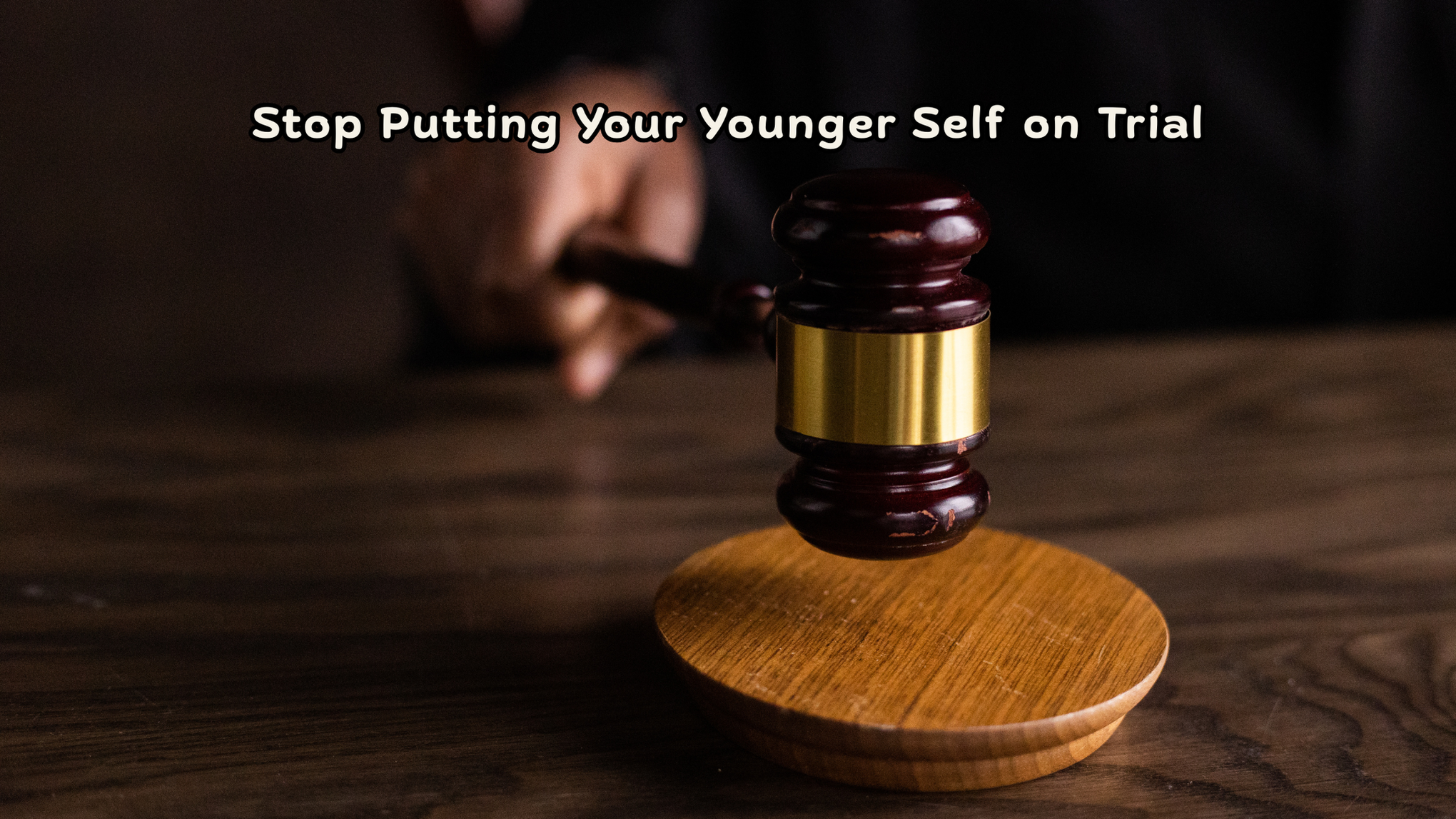
Imagine a courtroom.
Present-day you is sitting at the prosecutor's table with sheafs of notes… reams of evidence… brimming with confidence that they will succeed in their effort to find you guilty.
In the defendant’s box is the version of you from twenty or thirty years ago.
At the bench, is “Judge Conscience”. They too, are living in the now. They didn’t know you either back then.
One by one, the prosecutor puts forth today's experience, today's wisdom, and today's perspective as evidence of your transgression… your past decision… your past choice...
No wonder it appears that you’re found lacking. The evidence didn't even exist when you made the decision.
Meanwhile, present-day you, and present day “Judge Conscience” proceed to convict and sentence you to a life sentence of guilt… disappointment in yourself… or maybe even regret.
And many of us continue holding these trials over and over for years - sometimes decades - judging younger versions of ourselves with information they couldn't possibly have known at the time.
Regret Isn't the Same as Remorse
As I was thinking about what I wanted to talk about in this week's podcast episode, I realized I'd been using two words almost interchangeably that actually describe very different experiences.
Regret is often about ourselves. Wishing we'd chosen differently… that we’d made a different decision… or had done something we wished we hadn’t – or conversely hadn’t done something we wish we had.
Remorse is not the same. It’s ‘other-focused’. It's about recognizing that our actions hurt someone else and wishing we'd handled things differently.
Both can be uncomfortable – and both can teach us something.
The problem is…
Both can easily morph into shame. Which changes both of them.
The Housemate Nobody Invited
Shame is sneaky. It moves into our emotional house, eats all the good groceries, leaves passive-aggressive notes on the fridge, and keeps opening boxes in the attic we'd carefully taped closed and packed away years ago.
It doesn't simply remind us of a something we wish we’d done differently…. It quietly transforms the event and outcome into our identity.
A poor decision becomes proof of our ‘stupidity’ or that we're a failure. A difficult relationship becomes evidence that there is something wrong with us or even that we're unlovable.
One painful moment somehow metastasizes and invades other areas of our life to overshadow hundreds of moments where we showed courage, kindness, resilience, or love.
Shame doesn't tell the whole story.
It edits it.
Ring Boxes and Refrigerator Boxes
One of the images that kept coming back to me while I was preparing for this episode was that attic filled with boxes.
Some of those boxes absolutely deserve to stay. They're part of our history and they contain lessons worth remembering.
But over time, shame has a habit of wrapping tiny, ring-box-sized lessons in refrigerator-sized cartons.
The lesson itself hasn't changed. Only the packaging has.
Maybe the work isn't throwing the box away. Maybe it's simply opening it, taking the lesson, throwing away the shame it’s wrapped in, and repacking it properly.
The Love Letter
This week's episode wasn’t really about “forgiveness”. It was about context.
About recognizing that the person who made those decisions or choices twenty or thirty – or even five or ten – years ago…? They didn't have today's wisdom.
They had yesterday's knowledge… Yesterday's resources… Yesterday's fears… Yesterday's brain... Yesterday’s life experience…
And somehow...
Despite making mistakes...
Despite being wildly under-qualified for some of the biggest decisions they were asked to make...
They survived long enough to become the person reading these words today.
Maybe it's time we stopped putting them on trial.
Maybe it's time we wrote them a love letter and thanked them for doing the best they could with the information they had at the time, instead.
Listen to Episode 51: The Version of You That Survived: Why We Keep Feeding the Demons We Thought We'd Left Behind for a deeper conversation about regret, remorse, shame, hindsight bias, and why sometimes the kindest thing we can do is finally tell ourselves the whole story - not just the parts shame chose to record.